








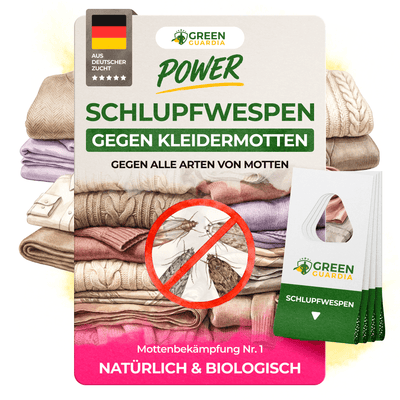
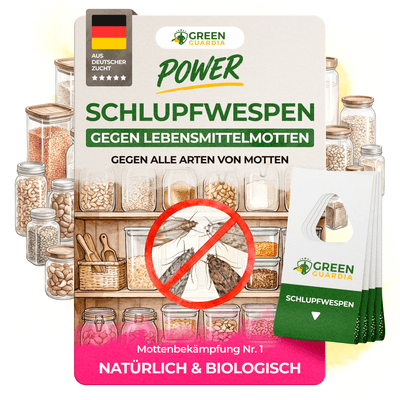


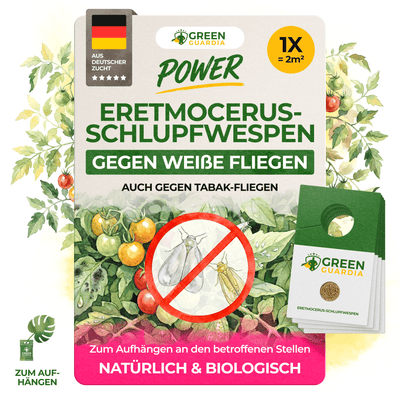



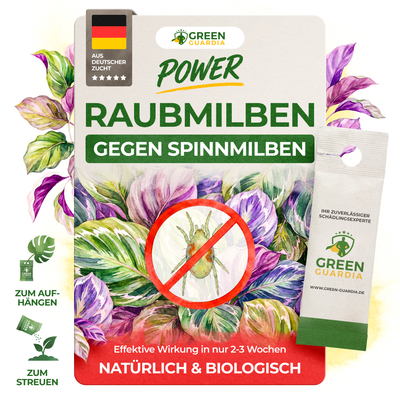
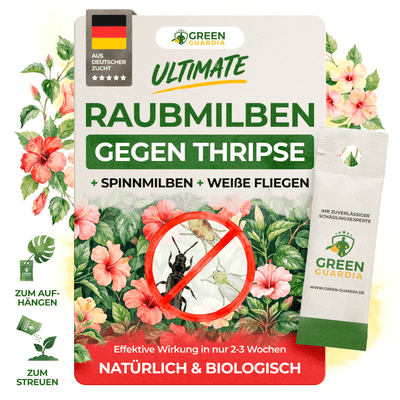
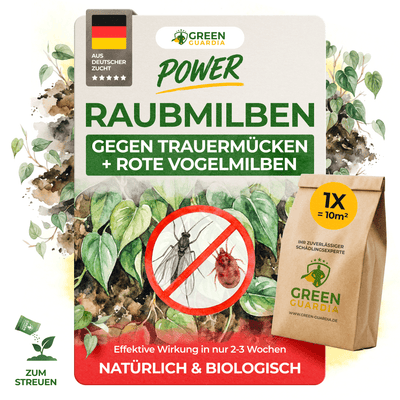




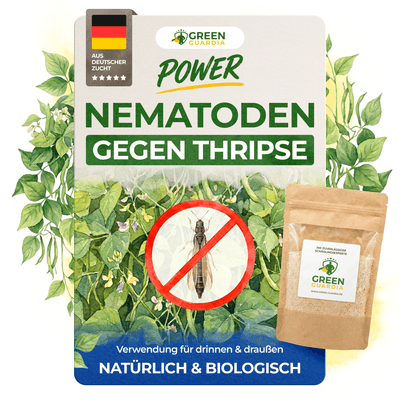
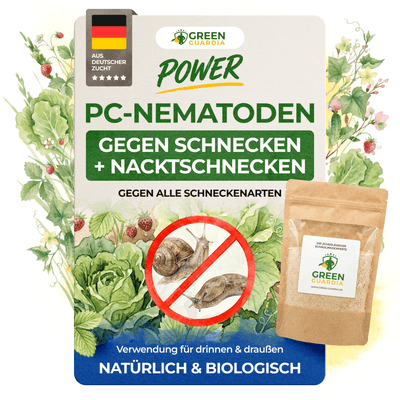
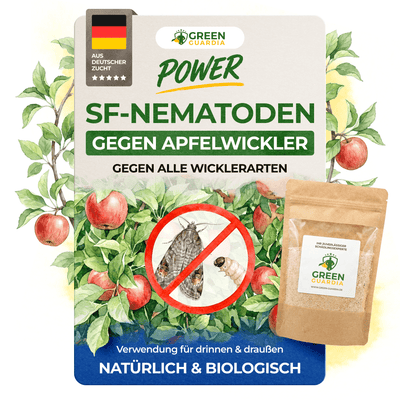























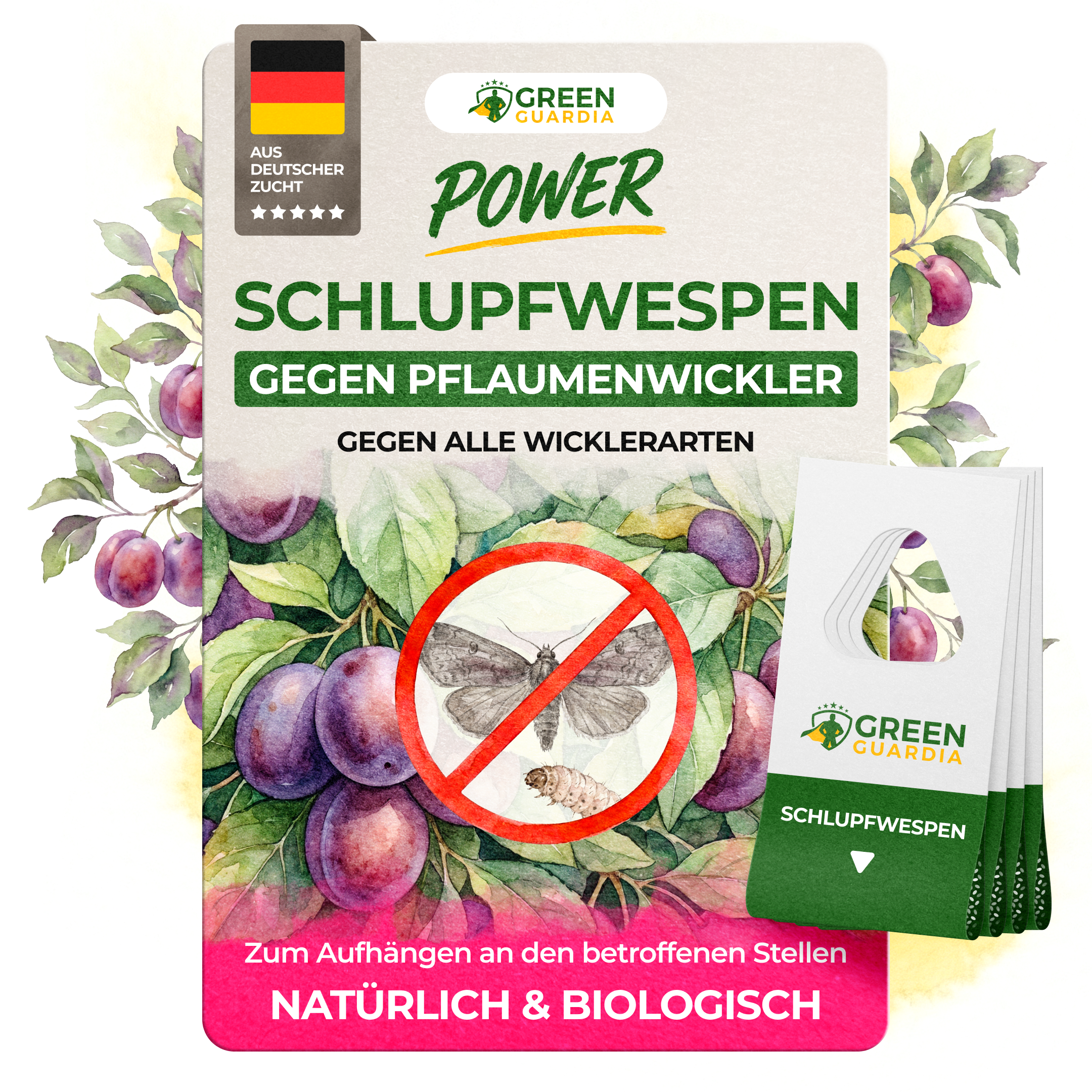
Number of cards per delivery


Explanation of treatment types
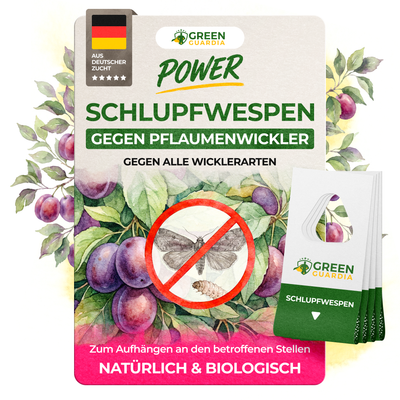
Parasitic wasps against plum moths
-
100% natural help against moth species
-
From German breeding – delivered quickly
-
Completely without chemicals – no residues
-
Discreet, effective & biologically sustainable
-
Safe for children & pets
In stock - with you in 2-4 business days



What our customers say
-
Efficacy
not effective highly effective -
Application
complicated child's play -
Tolerability
concerning very safe
Please choose: Single delivery or full treatment


Choose options
-
100% natural help against moth species
-
From German breeding – delivered quickly
-
Completely without chemicals – no residues
-
Discreet, effective & biologically sustainable
-
Safe for children & pets
In stock - with you in 2-4 business days
Please choose: Single delivery or full treatment
-
100% natural help against moth species
-
From German breeding – delivered quickly
-
Completely without chemicals – no residues
-
Discreet, effective & biologically sustainable
-
Safe for children & pets
In stock - with you in 2-4 business days
Please choose: Single delivery or full treatment
Egg parasitic wasps against plum fruit moths
Egg parasitic wasps against plum fruit moths are 0.3–0.4 mm small beneficial insects of the genus Trichogramma that hatch from carrier cards placed in the fruit tree and parasitize the eggs of the plum fruit moth (Cydia funebrana) so that no more larvae hatch. They are a biological alternative to chemical sprays on plums, damsons, mirabelle plums, and apricots.
Maggots in plums and brown tunnels in the flesh
The damsons look ripe, but cutting them open reveals brown feeding tunnels and droppings. Some fruits drop from the tree prematurely. The wormy plums are caused by the plum fruit moth (Cydia funebrana), one of the most common pests in stone fruit. Its small moths preferably lay their eggs directly on the fruits or near the stem attachments. After hatching, the larva bores into the inside of the fruit, and an infestation often goes unnoticed for a long time.
Before the plum fruit moth sends larva after larva into the fruit
Those primarily affected are plums, damsons, mirabelle plums, and apricots, whether as a single tree in a home garden or in a row of fruit trees. Once the larva is inside the fruit, hardly anything helps from the outside. Therefore, the decisive factor is the egg-laying phase, which begins around May. Starting at this time protects the harvest right from the start, and without sprays on fruits that you want to eat later.
Trichogramma, the tiny egg hunters in the tree
GREEN GUARDIA egg parasitic wasps of the genus Trichogramma are only 0.3–0.4 mm in size. They hatch from carrier cards that you hang directly in the tree and search for moth eggs on fruits, leaves, and shoots. They parasitize these eggs so that no more larvae hatch. Once the job is done, the beneficial insects decompose without leaving any residue. They are harmless to humans, animals, and plants, and they do not sting.
Order egg parasitic wasps against plum fruit moths as a 9-week treatment
A single application is not enough because new generations of moths lay eggs throughout the season. Our egg parasitic wasps therefore come as a 9-week treatment with three deliveries: 1–3 days after the order, after three weeks, and after six weeks. Each subsequent delivery is automatically paid for shortly beforehand, with no subscription and no hidden costs. For a single tree of 2–3 m in height, we recommend three cards; in a row, one card every 2–3 meters. You can order 3 to 15 cards per delivery, and the beneficial insects come from German breeding facilities. We also have dedicated egg parasitic wasps against codling moths for apples and pears.
When are egg parasitic wasps the right choice?
Choose egg parasitic wasps if you found maggots in plums or damsons the previous year and want to protect the next harvest without chemical sprays. They are the right choice for plum, damson, mirabelle plum, and apricot trees in home gardens or orchards. They work best as a complete 9-week treatment, starting in May with the beginning of the egg-laying phase.
When egg parasitic wasps are not the right method
Egg parasitic wasps cannot reach larvae that have already bored into the fruits; they parasitize the eggs. Anyone who starts in the middle of summer therefore only protects subsequent egg-laying cycles. A single delivery alone does not replace a complete treatment. Infested fruit and fallen fruit should continue to go into household waste and not onto the compost.
🌿 Conclusion: GREEN GUARDIA egg parasitic wasps are a biological, residue-free solution against the plum fruit moth on plums, damsons, mirabelle plums, and apricots. Easy to hang up, do not sting, and are harmless to humans and animals.
Plum cake without surprises. Buy egg parasitic wasps against plum fruit moths now!
Anwendung & Tipps: So nutzt du Schlupfwespen richtig
- Zeitpunkt: Bringe die Trägerkarten rechtzeitig zur Eiablagezeit (ab ca. Mai) direkt in die Obstbäume ein.
- Platzierung: 3 Karten pro Baum bei Einzelbäumen mit 2–3 m Höhe, alle 2–3 Meter bei Reihenpflanzung oder dichterem Bestand.
- Wiederholung: Wiederhole die Ausbringung alle 2–3 Wochen mindestens dreimal, um alle Wicklergenerationen während der Saison zuverlässig zu erfassen.
Warum eine 9-Wochen-Kur mit 3 Lieferungen?
Die GREEN GUARDIA 9-Wochen-Kur wurde entwickelt, um den gesamten Entwicklungszyklus des Pflaumenwicklers (Cydia funebrana) zuverlässig zu unterbrechen.
Der Pflaumenwickler durchläuft mehrere Stadien (Ei → Larve → Puppe → Falter). Um alle Generationen sicher zu erfassen, erfolgt die Behandlung in drei zeitlich abgestimmten Lieferintervallen.
Ablauf der Kur
- 1. Lieferung (1–3 Tage nach Bestellung): Parasitiert bereits abgelegte Wicklereier.
- 2. Lieferung (nach 3 Wochen): Bekämpft neu abgelegte Eier der nächsten Generation.
- 3. Lieferung (nach 6 Wochen): Finaler Schutz zur nachhaltigen Reduzierung des Pflaumenwicklers.
Dein Vorteil
- Zahlung erfolgt automatisch kurz vor Folgelieferung – du erhältst automatisch alle 3 Lieferungen.
- Kein Abo, keine versteckten Kosten.
- Maximale Langzeitwirkung – ganz ohne Chemie.
Einzellieferung zur Pflaumenwickler-Bekämpfung – wann sinnvoll?
Die GREEN GUARDIA Schlupfwespen Einzellieferung eignet sich ideal als ergänzende Maßnahme, wenn du bereits eine Schlupfwespen-Kur durchgeführt hast und weiterhin Pflaumenwickler-Aktivität im Obstgarten beobachtest.
Wichtig: Die Einzellieferung ersetzt keine vollständige Kur. Eine alleinige Anwendung ist nicht ausreichend, um den Pflaumenwickler dauerhaft zu bekämpfen.
Geeignete Einsatzbereiche
- Pflaumen- & Zwetschgenbäume (gegen Pflaumenwickler)
- Mirabellen & Aprikosen
- Äpfel & Birnen bei Mischbefall durch Wicklerarten
🍑 Tipp: Starte die erste Ausbringung ab Mai, wenn die Eiablage beginnt. So schützt du Pflaumen, Zwetschgen und Mirabellen von Anfang an zuverlässig.
Was sind Pflaumenwickler?
Pflaumenwickler (Cydia funebrana) gehören zu den häufigsten Schädlingen im Steinobstbau und befallen vor allem Pflaumen, Zwetschgen, Mirabellen und Aprikosen. Die kleinen Falter legen ihre Eier bevorzugt direkt auf die Früchte oder in die Nähe der Stielansätze ab.
Nach dem Schlüpfen bohren sich die Larven ins Fruchtinnere, hinterlassen braune Fraßgänge und Kotkrümel und sorgen häufig für ein frühzeitiges Abfallen der Früchte. Ein Befall bleibt oft lange unentdeckt.
Wie kann ich Pflaumenwickler-Befall vorbeugen?
- Frühzeitige Ausbringung von Schlupfwespen, um den Entwicklungszyklus des Pflaumenwicklers zu unterbrechen
- Befallene Früchte sofort entfernen und im Hausmüll entsorgen (nicht auf dem Kompost!)
- Pheromonfallen einsetzen, um Flugzeit und Eiablage zu kontrollieren
- Fallobst regelmäßig aufsammeln und die Baumumgebung sauber halten
🐛 Tipp: Auch nach der Ernte ist eine Schlupfwespen-Nachbehandlung sinnvoll. So reduzierst du überwinternde Eier und senkst den Befallsdruck im nächsten Jahr deutlich.

GREEN GUARDIA vs. Other providers
What sets us apart from the others

|

|

Products for home, garden & pet-related areas |

Unclear product information |

Beneficial insects from German breeding |
Unclear origin information |

Developed for practical use |
Complicated selection |

Clear application instructions |
Few application instructions |

Freshly bottled or carefully packaged |
Longer storage or delivery times possible |

German breeding
Beneficial insects from controlled German breeding – quality you can rely on

Expert advice
Application tips and support from our experts – targeted and effective.

Fast help
Our beneficial insects are ready for immediate use and provide targeted help against acute infestations in the house or garden.

Natural & safe
Safe in everyday life – use is completely risk-free for children, pets & plants.
We let our customers speak.

Natural pest control
At GREEN GUARDIA you will find the right natural solution for every pest problem – completely without chemicals.
Whether trichogramma wasps against moths, predatory mites against spider mites, or nematodes against fungus gnats and slugs – our beneficial insects help reliably in the house, garden, or greenhouse.
As a specialist in biological pest control, we stand for quality, innovation, and a sustainable effect – in harmony with nature, humans, and animals.

Expert advice – Personal & practical
Our expert advisors support you with targeted application tips and years of experience in natural pest control. Whether you have questions about application, combining different beneficial insects, or selecting the right product – we will help you quickly and competently.
FAQ Trichogramma wasps
Do you have questions about our products, application, or shipping? Here you will find the most important answers at a glance. If anything remains unclear, feel free to contact us!
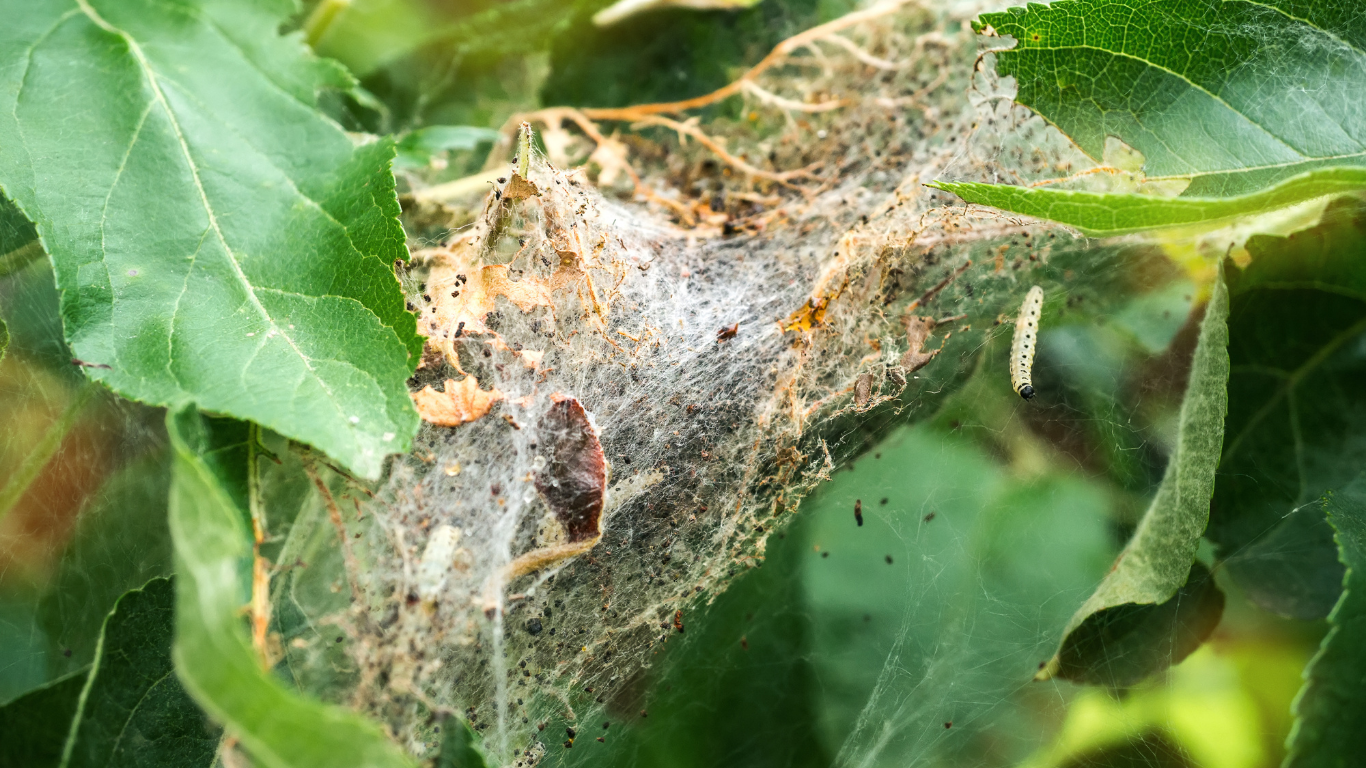
Trichogramma wasps are tiny insects that parasitize pest eggs. They lay their eggs inside the pest eggs, destroying them and stopping the reproduction of the pests.
Yes, trichogramma wasps are harmless to humans and pets. They do not sting and do not contain any toxic substances.
A “trigram” card is a carrier material onto which trichogramma wasp eggs are applied. These cards are used to combat pest infestations.
The trichogramma wasps begin combating the pest eggs within a few days of placing the cards. The entire process can take several weeks.
Once there are no more pest eggs left, the trichogramma wasps die off naturally.
Depending on the type of pest, an infestation can be identified by various typical signs:
- in storage containers, on shelves, or in wardrobes
- on fruit, wood, leaves, or produce
- near food, plants, or light sources
- on indoor or garden plants
- in textiles, soil, or on plants
The earlier you detect the infestation, the more effectively you can take action using natural methods – such as our beneficial insects.
The cards are securely packaged and sent by mail. Delivery within Germany is handled by Deutsche Post. Therefore, please check your mailbox regularly.
Yes, the trichogramma wasps are packaged in such a way that they survive even in cold temperatures.
Follow-up deliveries are sent automatically, which is why tracking is often not available. If you have any questions, you can contact us at any time.
Live beneficial insects are excluded from exchange. However, we are happy to help you if you encounter any problems.
Shipping Information
- Fresh shipping: Orders placed from Monday to Thursday are freshly shipped every day.
- Weekend orders: Orders placed after Thursday 9 a.m. will be shipped the following Monday to guarantee the freshest beneficial insects.
To use trichogramma wasps effectively against codling moths, you should place the carrier cards strategically and early in your garden or orchard:
- Start from May onwards, as soon as temperatures are consistently above 15 °C – this is the peak time for codling moths to lay eggs.
- Hang the cards directly in the apple, pear, or plum trees – ideally near young fruit or branches.
- Use approx. 1 card per tree or every 2–3 meters along the tree row, depending on the size and density of the area.
- Repeat the application at intervals of 2–3 weeks at least three times to cover all generations of eggs.
The trichogramma wasps actively search for codling moth eggs, parasitize them, and thus prevent new larvae from hatching – completely without chemicals.
No, the cards do not need to be opened. Simply place them out just as they were delivered.
Treatment typically lasts several weeks. The cards should be replaced every three weeks until the infestation is completely eliminated.
Place the cards out immediately upon receipt and avoid using chemical products near the cards.
Please check the respective product descriptions. There we explain how many cards you will need.
Trichogramma wasps only travel short distances. Therefore, it is important to place the cards in the immediate vicinity of the infestation.
Yes, pheromone sticky traps can be used in parallel to catch adult pests.
Yes, it is possible that the trichogramma wasps are resting in the packaging. Place the cards out as instructed so they can hatch.
The treatment takes several weeks because the trichogramma wasps must continuously parasitize new pest eggs. A shorter application is often not enough to completely eliminate the infestation.
Trichogramma wasps exclusively combat the eggs of the codling moth, not already hatched larvae or feeding damage. If the larvae are already inside the fruit, they eat their way through the flesh and make the apples inedible.
To prevent the pests from developing further or laying new eggs, it is important to consistently remove and dispose of infested fruit – not in the compost, but in the residual waste. This effectively interrupts the life cycle and prevents the codling moth from spreading further – even in the next season.
Tortrix moth species – such as the codling moth or plum fruit moth – preferentially infest ripening fruit directly on the tree. Particularly at risk are:
- Apples
- Pears
- Plums and damsons
- Apricots
- Quinces
The larvae bore into the fruit flesh, leaving behind brown feeding tunnels, boreholes, and crumbly droppings. Infested fruit often falls prematurely from the tree.
You should consistently collect these fruits from the ground and dispose of them via household waste – not in the compost! This breaks the development cycle and effectively prevents a heavier infestation in the next season.
Common moth species in households are pantry moths and clothes moths.


