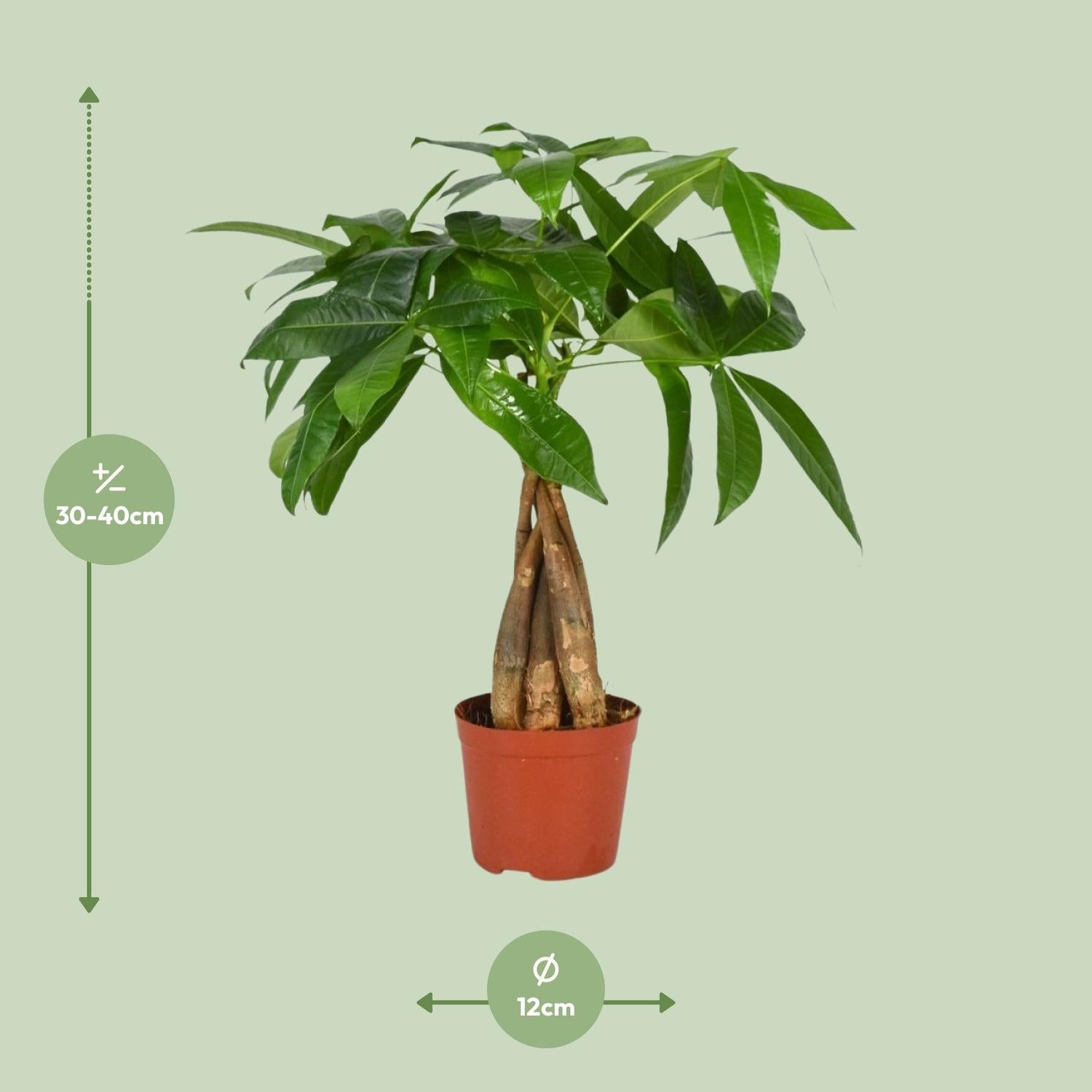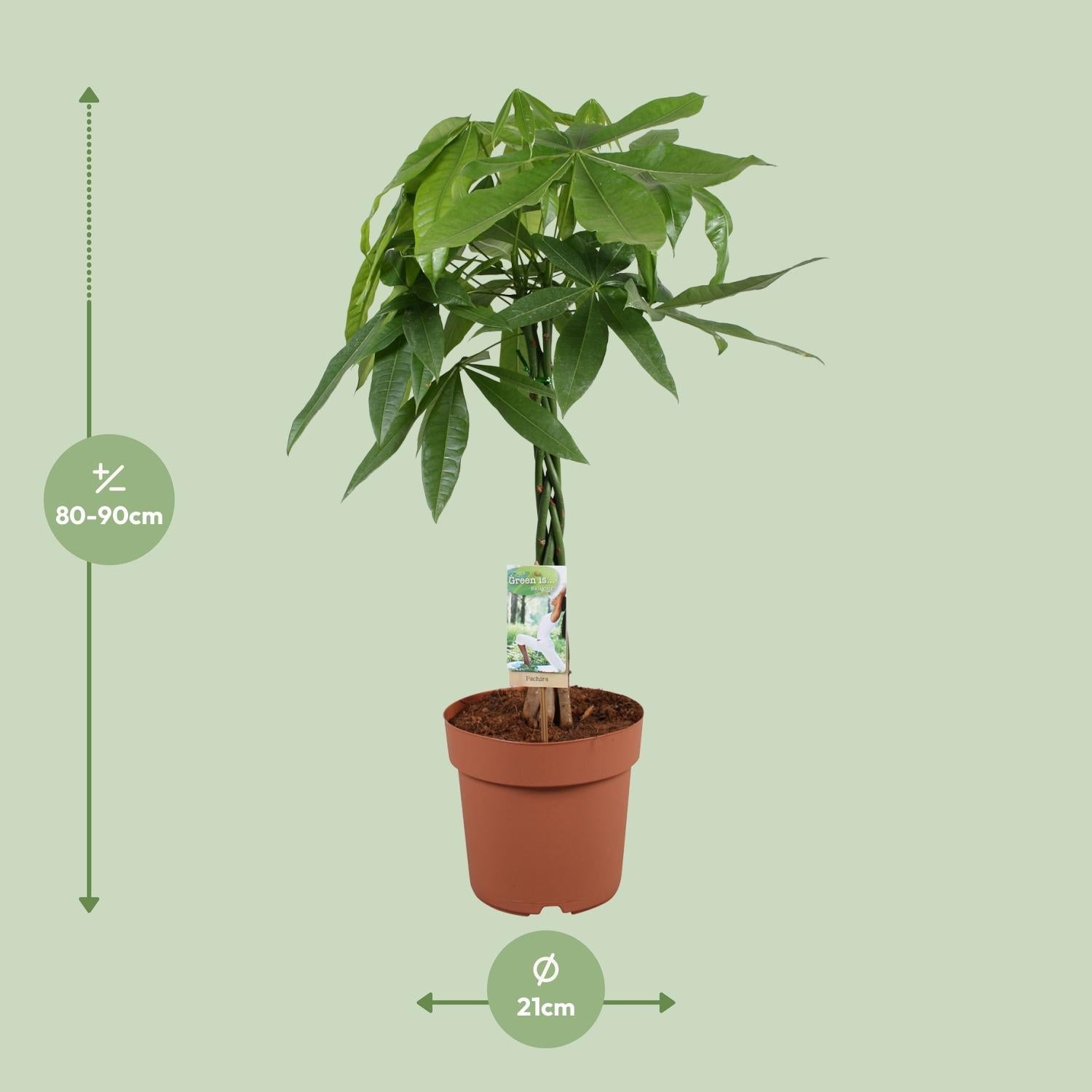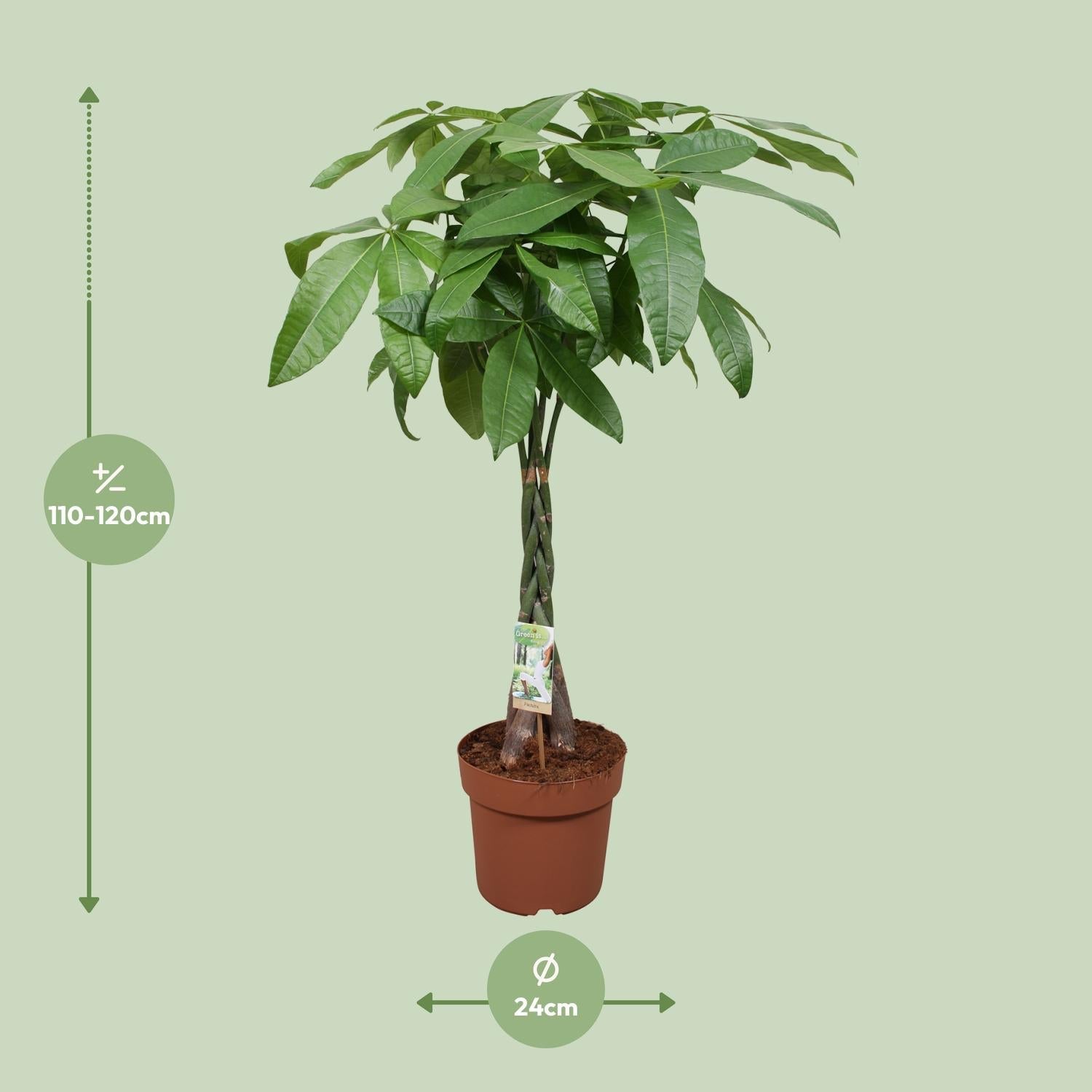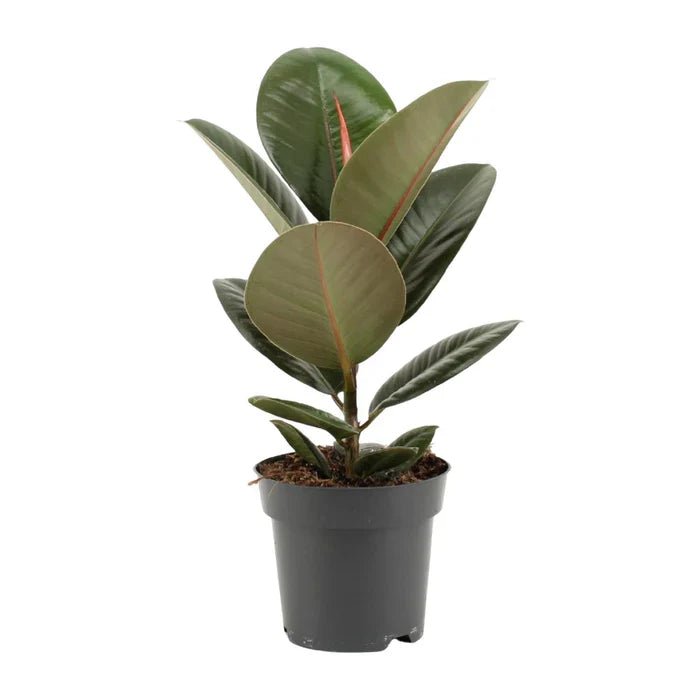































































The Pachira aquatica, popularly known as the Money Tree, is one of the most popular houseplants for modern homes and offices. With its distinctive, usually intricately braided trunk and deep green, palmately compound leaves, the Pachira money tree is a real eye-catcher. According to Feng Shui, it is also said to bring luck and prosperity into the home – one more reason to provide it with the best possible care.
Origin & Characteristics
The Money Tree originates from the swampy regions of Central and South America. In the wild, it grows into majestic trees. Despite its natural preference for moisture, it has proven to be extremely adaptable as a houseplant. A special feature is its trunk, which can store water, making the Pachira aquatica quite resilient.
Appearance & Growth
As a houseplant, the Pachira usually reaches a height of 35 to 120 cm. Its leaves are glossy and resemble chestnut leaves in shape. With proper care, it grows rapidly and consistently develops new crowns of leaves. Its trunk serves not only as a visual feature but is also the plant's central energy hub.
The ideal Pachira aquatica location
Where does the Money Tree feel most comfortable?
Light is crucial for its well-being. The Pachira aquatica location should be bright to semi-shaded. Direct, intense midday sun should be avoided as it can burn the leaves. It loves high humidity, so bright bathrooms or regular misting of the leaves with low-lime water are ideal for keeping it healthy.
Caring for the Money Tree & Watering correctly
When caring for your Money Tree, a moderate watering approach is important. Since the Pachira stores water in its trunk, it does not tolerate waterlogging at all. Water only when the top layer of soil has dried out. In winter, it needs significantly less water. Make sure that no water remains in the outer pot to prevent root rot.
Typical Problems & Solutions
Why does my Pachira have yellow or falling leaves?
A common cause is a change in location or drafts. The Pachira is sensitive to changes. Too much water also quickly leads to yellow leaves. In this case, check the soil moisture and reduce watering.
Natural care support
Especially with dry heating air in winter, spider mites can occasionally occur. Neem oil has proven effective for strengthening the leaf structure and as a form of natural care. It gently treats the surfaces of your Pachira aquatica and helps the plant maintain its natural resistance to external influences.
Propagation
Propagation works best via stem cuttings in early summer. These can be placed in a glass of water or directly into moist potting soil. Cultivation from seeds is also possible, though it requires a bit more patience.
FAQ about the Money Tree
Is the Pachira aquatica toxic to cats or dogs?
Good news for pet owners: The Pachira aquatica is considered non-toxic to pets. It can therefore be placed safely in households with dogs and cats.
How often should you fertilize the Money Tree?
During the growth phase from March to September, applying liquid fertilizer every two to four weeks is sufficient. Fertilization should be stopped in winter.
Can you prune the Money Tree?
Yes, pruning is perfectly fine and is best done in the spring. This encourages bushier growth and keeps the plant in shape if it becomes too large for its location.
Take action now: Bring your luck home
The Money Tree is the ideal plant for those who want to combine tropical flair with minimal maintenance. With the right location and moderate watering, it will beautify your home for years to come. Would you like to find your own personal lucky charm? Discover our robust Pachira aquatica in the 35-120 cm format now and enrich your home with this timeless beauty!
🍃 Pro tip: Regularly rotate your Pachira 90 degrees. Since it leans strongly towards the light, this prevents lopsided growth and promotes an evenly dense leaf crown.