
























































Fighting fungus gnats: effective and natural methods
Are you watering your houseplants – and suddenly, small black flies rise from the soil? If so, you are likely dealing with fungus gnats. While the adult flies are mainly just annoying, the real problem is hidden in the substrate: fungus gnat larvae can damage delicate roots, weakening your plants and stunting their growth. The good news: by understanding the causes and taking targeted action, you can get rid of fungus gnats naturally and prevent them in the long term.
Causes: where do fungus gnats come from?
Fungus gnats are usually introduced via potting soil or attracted by the conditions they love: damp substrate, organic matter, and warm temperatures. They occur particularly often when plants are watered too frequently or the soil stays constantly wet.
- Overwatering and constantly damp soil
- Waterlogging in saucers or cachepots
- New potting soil (which may already contain larvae/eggs)
- Warm rooms with poor air circulation
- Organic soil (containing compost or seed-starting mix) as an ideal habitat
Detection: typical signs of a fungus gnat infestation
A fungus gnat infestation is usually easy to spot. Look out for these symptoms:
- Small black flies sitting on the soil, the edge of the pot, or flying up when you water
- Plants that look yellowish or weak despite proper care
- Substrate remains damp for a long time and smells “musty”
- In severe infestations: poor growth, drooping leaves (root stress caused by larvae)
Control: getting rid of fungus gnats naturally – the best methods
If you want to fight fungus gnats, a multi-stage plan is most effective: reduce the number of adult flies while simultaneously targeting the larvae in the substrate. This is how you sustainably break the cycle.
1) Immediate measure: reduce moisture
- Water less frequently, and only when the top 2–3 cm of soil have dried out.
- Empty your saucers consistently – waterlogging is the main trigger for fungus gnats.
- Move plants to a breezier spot and ensure better air circulation.
2) Targeted larval control: use nematodes
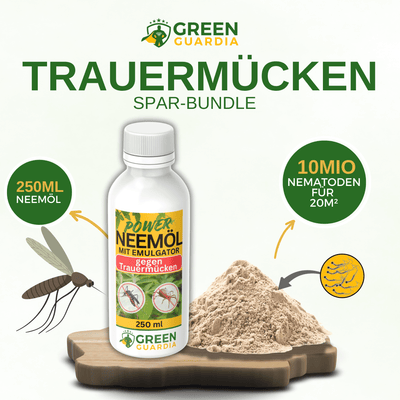
The root cause is the larvae in the soil. A proven, natural solution is SF nematodes for fungus gnats. These microscopic beneficial organisms are applied with the irrigation water and work exactly where the fungus gnats develop – directly in the substrate. This significantly reduces the infestation pressure without the need for harsh chemicals.
3) Additional stabilization: predatory mites as beneficials
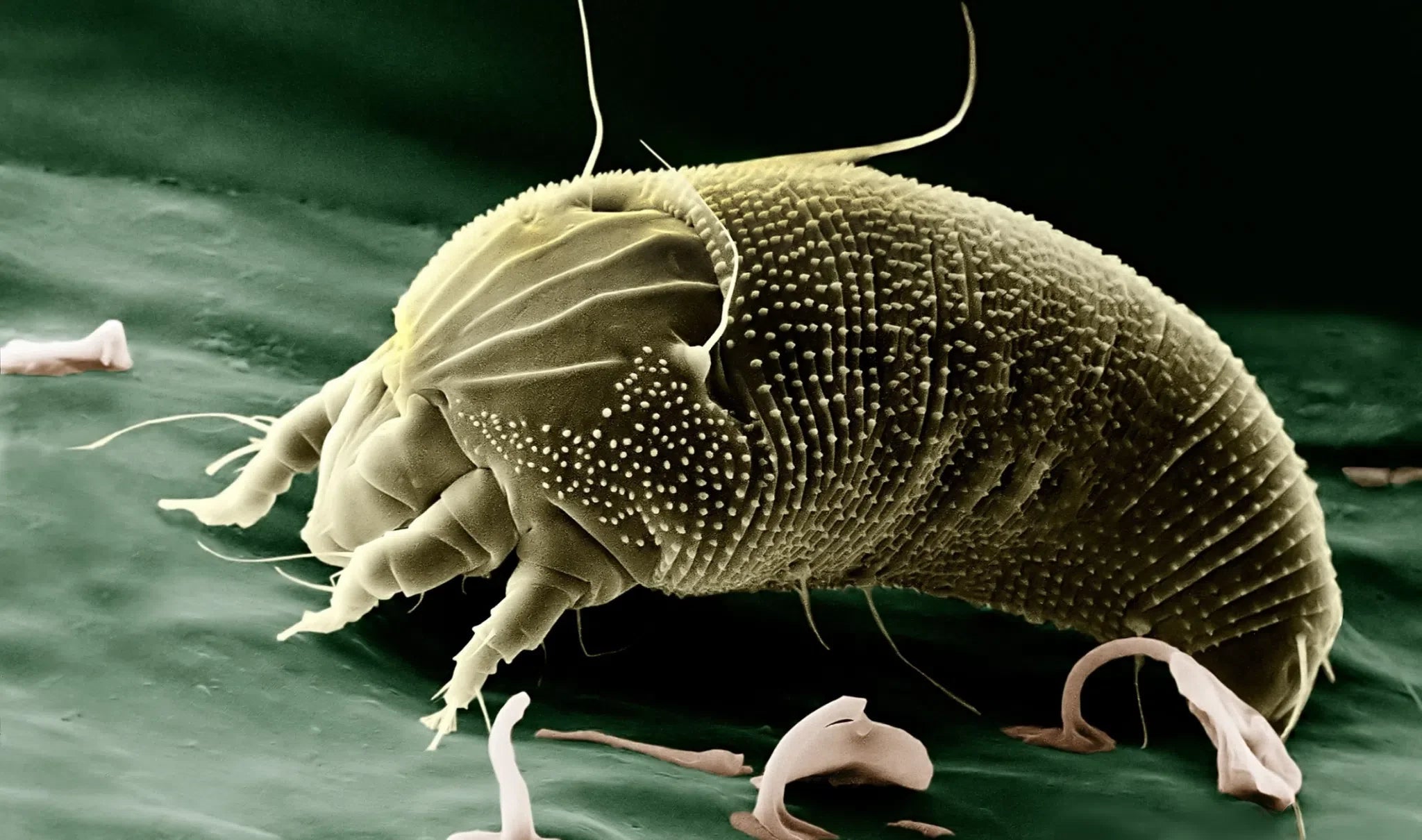
Especially in cases of recurring problems or with many plants in the home, it can be useful to provide additional support to the biological balance. Targeted use of beneficials, such as a predatory mite mix for fungus gnats, is ideal here. Predatory mites are natural enemies and can help to keep the cycle in check in the long term – especially in areas where fungus gnats keep reappearing.
4) Caution with classic home remedies
Many affected people turn to well-known methods first, testing home remedies like inserting matchsticks or sprinkling the soil with baking soda. However, experience shows that these fungus gnat home remedies usually fail to completely eliminate the larvae deep in the soil. They only combat superficial symptoms, while the next generation continues to develop unchecked in the damp substrate.
5) Home remedies that provide support (but are rarely enough on their own)
- Quartz sand cover: A thin layer of sand (1–2 cm) can make it harder for the flies to lay eggs.
- Yellow sticky traps: These catch flying fungus gnats and reduce the number of adults.
- Substrate check: In cases of severe infestation, replacing the soil entirely can be helpful.
Tip: You will achieve the best results by using nematodes for fungus gnats to reduce the larvae while simultaneously lowering moisture levels. For persistent cases, adding a predatory mite treatment may be beneficial.
Prevention: keep fungus gnats from coming back
To ensure that fungus gnats don't become a permanent issue, these simple but very effective routines help:
- Adjust your watering routine: water deeply but less frequently
- Store soil in a dry place and do not leave open bags in damp cellars
- Use drainage (e.g., expanded clay) to allow excess water to flow away
- Check new soil: if necessary, store it in a dry and airy place before use
- Regularly inspect your plants – especially in the warmer months
Frequently asked questions about fungus gnats
Why do fungus gnats keep coming back?
The cause is usually constantly damp soil or waterlogging. Fungus gnats need damp substrate for the larvae to survive. If you adjust your watering habits and keep the substrate drier, you will break the cycle much faster.
What is the fastest way to combat fungus gnat larvae?
The most effective method is a targeted treatment in the substrate – for example, nematodes for fungus gnats. They work exactly where the infestation begins and can significantly reduce the larval population.
What role do predatory mites play in controlling fungus gnats?
Predatory mites are natural enemies and can help stabilize the balance in plant environments. A suitable approach is the predatory mite mix for fungus gnats, especially for recurring infestations or when you have many plants.
Do home remedies like baking soda or matchsticks help?
No, simple home remedies are usually not enough. They often fail to reach the larvae deep in the substrate. For sustainable success, rely on biological beneficials such as SF nematodes and adjust your watering habits instead.
Are yellow sticky traps and sand enough on their own?
Yellow sticky traps and sand are good supportive measures because they reduce the number of adults and make it harder for them to lay eggs. For lasting success, however, you should also specifically target the larvae in the substrate and reduce moisture.
Take action now:
If you want to get rid of fungus gnats, start with the most important step: optimize your watering routine and avoid waterlogging. For a targeted, natural solution in the substrate, nematodes for fungus gnats are well-suited. If you want to provide long-term stabilization – especially if you have many plants – the predatory mite mix for fungus gnats can be a useful addition.