


























































Ficus Ginseng – Care, location & tips for the bonsai fig
A bonsai brings peace and elegance to any room, yet many people are put off by the supposedly complicated care. The Ficus Ginseng is the perfect exception here. With its distinctive, thick trunk and glossy leaves, it combines the aesthetics of an ancient tree with the robustness of a classic houseplant. In this article, you will learn how to best care for your Ficus Ginseng.
Origin & Characteristics
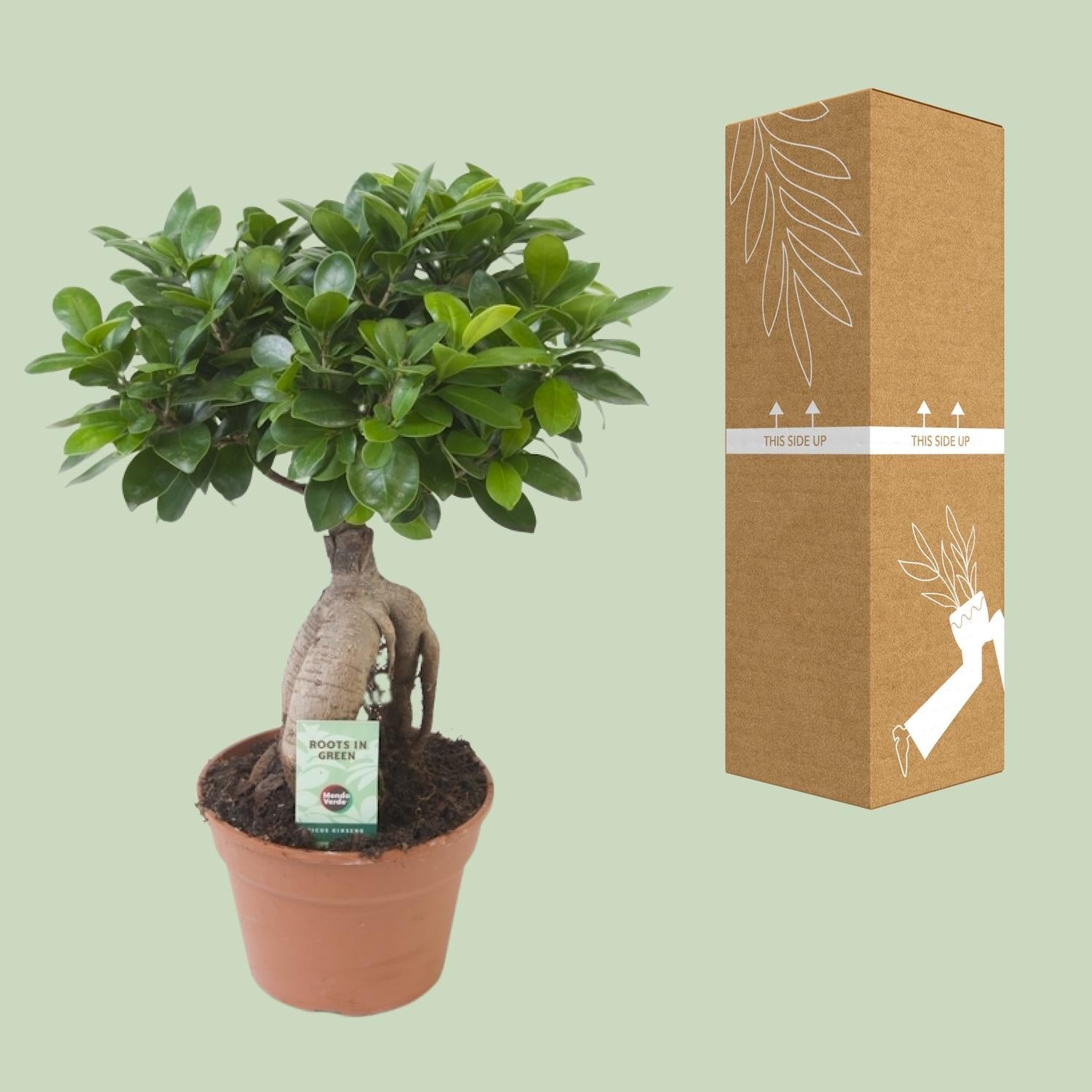
The bonsai fig belongs to the fig genus (Ficus) and is native to the tropical regions of Southeast Asia. The name "Ginseng" is derived from the Chinese word for "root," which refers to the strikingly shaped, fleshy aerial roots that give the tree its characteristic appearance. The Ficus Ginseng is known in particular for its adaptability and is forgiving of minor care mistakes.
Appearance & Growth
With a delivery height of 40–70 cm, the Ficus Ginseng is a magnificent eye-catcher. It grows compactly and forms a dense crown of dark green, oval leaves. The special thing is: every plant is unique, as the bizarre root trunks have grown individually. The shape of the bonsai can be permanently maintained through regular pruning.
The ideal location for a bonsai fig
Which spot is perfect for the Ficus?
For your bonsai to remain healthy, light is essential. The Ficus Ginseng loves bright light but is sensitive to extreme changes or drafts.
- Light: A very bright location, preferably with direct morning sun. Harsh midday sun in the summer should be avoided.
- Temperature: It likes it warm all year round (18–24 °C). In winter, the temperature should not drop below 15 °C.
- Relocation: Avoid moving it frequently, as the Ficus may react by shedding its leaves.
Care & Watering: Caring for your Ficus Ginseng
How much water does an indoor bonsai need?
When caring for your Ficus Ginseng, consistency is key. The soil should be kept slightly moist at all times, but never soggy. Waterlogging quickly leads to root rot. Only water when the surface of the soil has dried slightly. As it originates from the tropics, it loves high humidity – regular misting of the leaves with lime-free water promotes vitality.
Typical problems & solutions
Why is the Ficus Ginseng losing leaves?
Leaf drop is the most common problem with the bonsai fig. The cause is usually a change in location, drafts, or too little light in winter. Too much water can also cause the leaves to turn yellow and fall off. If leaves are falling, check the soil moisture immediately and ensure that the Ficus Ginseng is not standing directly over a hot radiator.
✂️ Pro tip: To maintain the bonsai shape, you should prune the shoots regularly. As soon as a branch has formed 6–8 new leaves, you can trim it back to 2–3 leaves.
Prevention & long-term health
For vigorous growth, we recommend supplying the Ficus with liquid bonsai fertilizer every two weeks during the growing phase from March to September. The plant should be repotted into fresh substrate every two to three years to ensure a proper supply of nutrients. Make sure there is a good drainage layer at the bottom of the pot.
Frequently asked questions about the Ficus Ginseng
Is the Ficus Ginseng poisonous to cats?
Yes, like all Ficus species, the bonsai fig is slightly toxic to pets. The milky sap can cause irritation if ingested or comes into contact with the skin.
Can I put the Ficus Ginseng outside in the summer?
Absolutely! As soon as the nighttime temperatures are consistently above 15 °C, the Ficus will enjoy the fresh air in a bright, sheltered spot in the garden or on the balcony.
When is the best time for pruning?
Light shaping can be done all year round. However, radical pruning should preferably take place in early spring before the main growth phase.
Get started now:
The Ficus Ginseng is the ideal partner for anyone who values aesthetics and simplicity. With a little attention to the right location and regular pruning, this bonsai will be a loyal companion in your home for many years to come. Dare to start your bonsai adventure and enjoy the soothing effect of your very own little tree.
Are you ready for your first bonsai? Discover our high-quality Ficus Ginseng in the shop and bring a piece of living art directly into your home!