






















































Bromelia Ananas – Care, location & tips for the ornamental pineapple
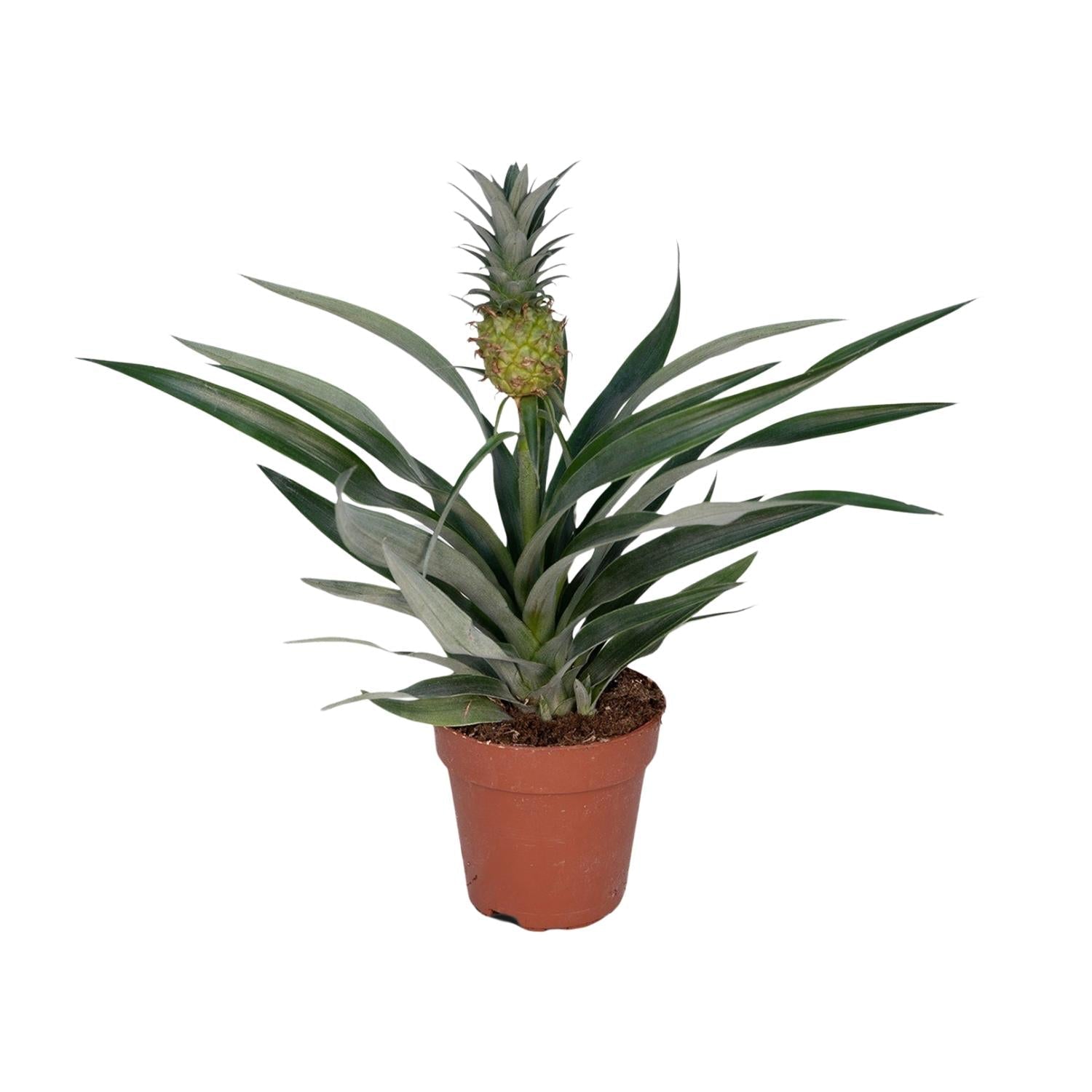
Dreaming of a vacation under palm trees? The Bromelia Ananas, also known as the ornamental pineapple, brings that exotic flair directly into your living room. With its striking rosette of leaves and the small, decorative fruit at the top, it is an absolute eye-catcher. In this guide, you will learn how to optimally care for your ornamental pineapple and what makes this type of bromeliad so special.
Origin & Characteristics
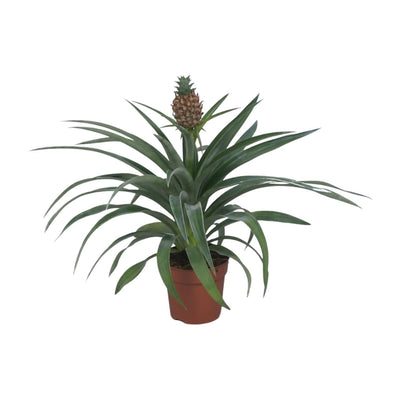
The Bromelia Ananas originally comes from the tropical regions of South America. Unlike edible pineapples, this variety is mainly prized for its aesthetic shape and its long-lasting decorative fruit. A healthy Bromelia Ananas is characterized by sword-shaped, partly slightly serrated leaves. Did you know that it produces oxygen at night? That makes it the perfect roommate for your bedroom.
Appearance & Growth
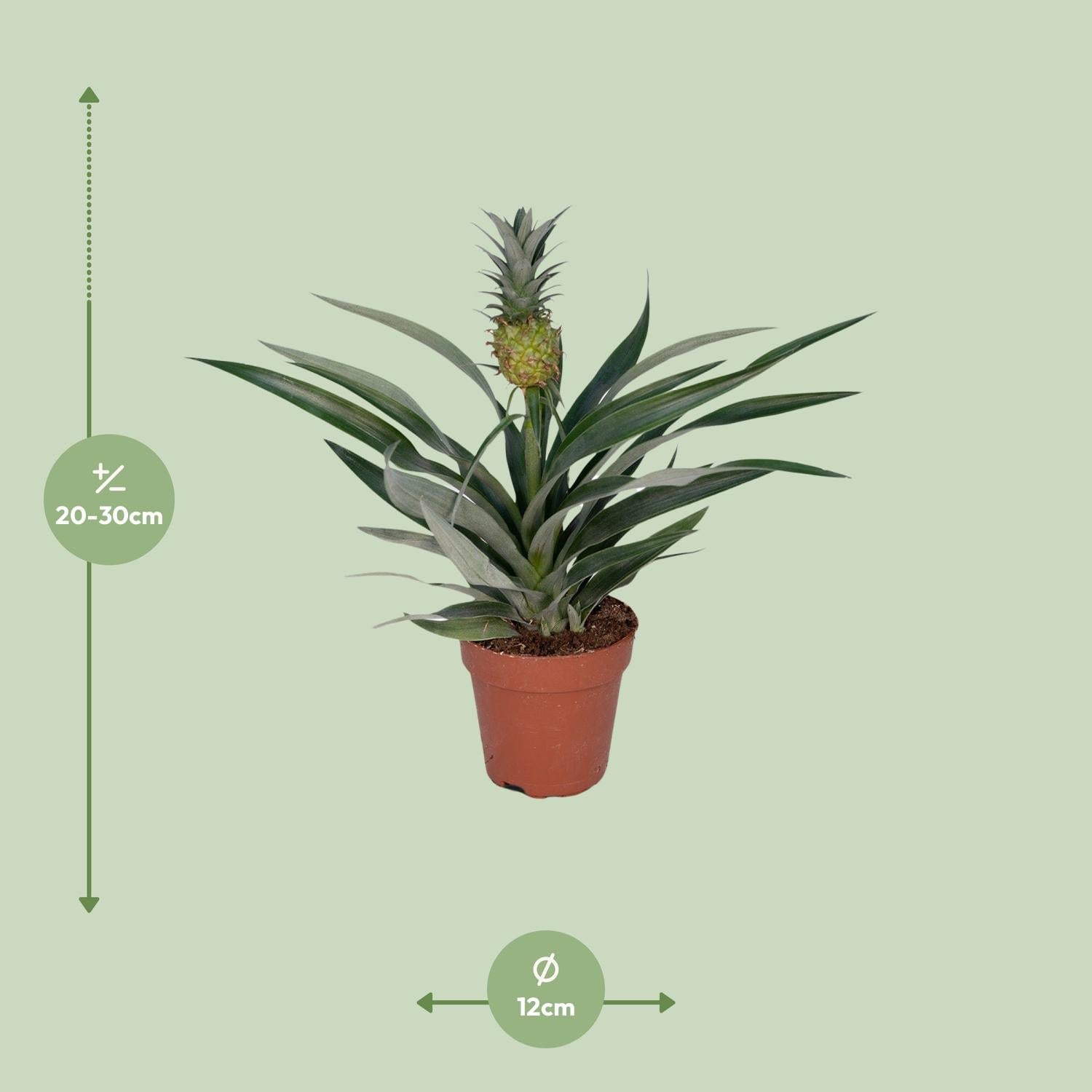
The ornamental pineapple grows very compactly and is delivered in a 12 cm pot with a height of approx. 30 cm. In the center of the rosette, a sturdy stem forms on the ornamental pineapple, topped by a small mini-pineapple. Even though the fruit is theoretically edible, it is primarily a decorative object due to its high acidity and small size.
The ideal location for an ornamental pineapple
Where does the pineapple plant feel most at home?
As a child of the tropics, the Bromelia Ananas loves light and warmth. A bright spot is the basic requirement for the coloration of the leaves and the stability of the fruit.
- Light: Very bright; direct sun (especially at noon) should be filtered if possible.
- Temperature: Warm year-round (18-25 °C). The thermometer should not drop below 15 °C.
- Humidity: It appreciates higher humidity, but usually copes well with normal room air.
Care & Watering: Caring for your ornamental pineapple
Proper watering for bromeliads
When caring for your ornamental pineapple, your watering technique is crucial. Bromeliads absorb water not only through their roots but also through their leaf rosette. Keep the substrate of the Bromelia Ananas slightly moist at all times, but avoid waterlogging. A small sip of lime-free water directly into the "funnel" (the center of the leaves) simulates rain in the tropics and is good for the plant.
Typical problems & solutions
Why does the ornamental pineapple get brown leaf tips?
Brown tips are often a sign of air that is too dry or lime-rich water. It is best to use rainwater or filtered water. If the fruit tips over, the plant is usually in a spot that is too dark or has been overwatered. After the fruit has ripened, the mother plant of the ornamental pineapple naturally begins to die off slowly – don't worry, offsets have usually already formed by this time!
🍍 Expert tip: To encourage the formation of offsets (pups), keep the plant in a bright spot even after the fruit has ripened. Once the pups are about half the size of the mother plant, they can be carefully separated and repotted.
Prevention & long-term health
Use a loose, well-draining substrate (e.g., orchid soil mixed with normal potting soil). You should only fertilize the Bromelia Ananas sparingly during the summer months via the irrigation water. Regular checks for mealybugs will protect the plant from uninvited guests.
Frequently asked questions about the ornamental pineapple
Can I eat the mini-pineapple?
Theoretically yes, as it belongs to the pineapple family. However, it is very acidic, fibrous, and was primarily cultivated as an ornamental plant. We recommend enjoying it as a visual highlight instead.
How long does the fruit stay on the plant?
The fruit of the Bromelia Ananas is very long-lasting and often remains stable and attractive for several months before it slowly dries out.
When should I repot the ornamental pineapple?
Repotting is usually only necessary for the young offsets. The flowering mother plant generally does not need a larger pot as its life cycle ends after the fruit is produced.
Take action now:
The ornamental pineapple is the perfect choice for anyone looking for an easy-care plant with that certain something. With its tropical look, it immediately brings summery vibes into your rooms. Ensure it gets enough light and use lime-free water, and this exceptional bromeliad will accompany you for a long time.
Bring the vacation feeling home! Order your exotic Bromelia Ananas from us now and look forward to a real botanical highlight!