





















































Thornless blackberry "Black Satin" – care, location & frequently asked questions
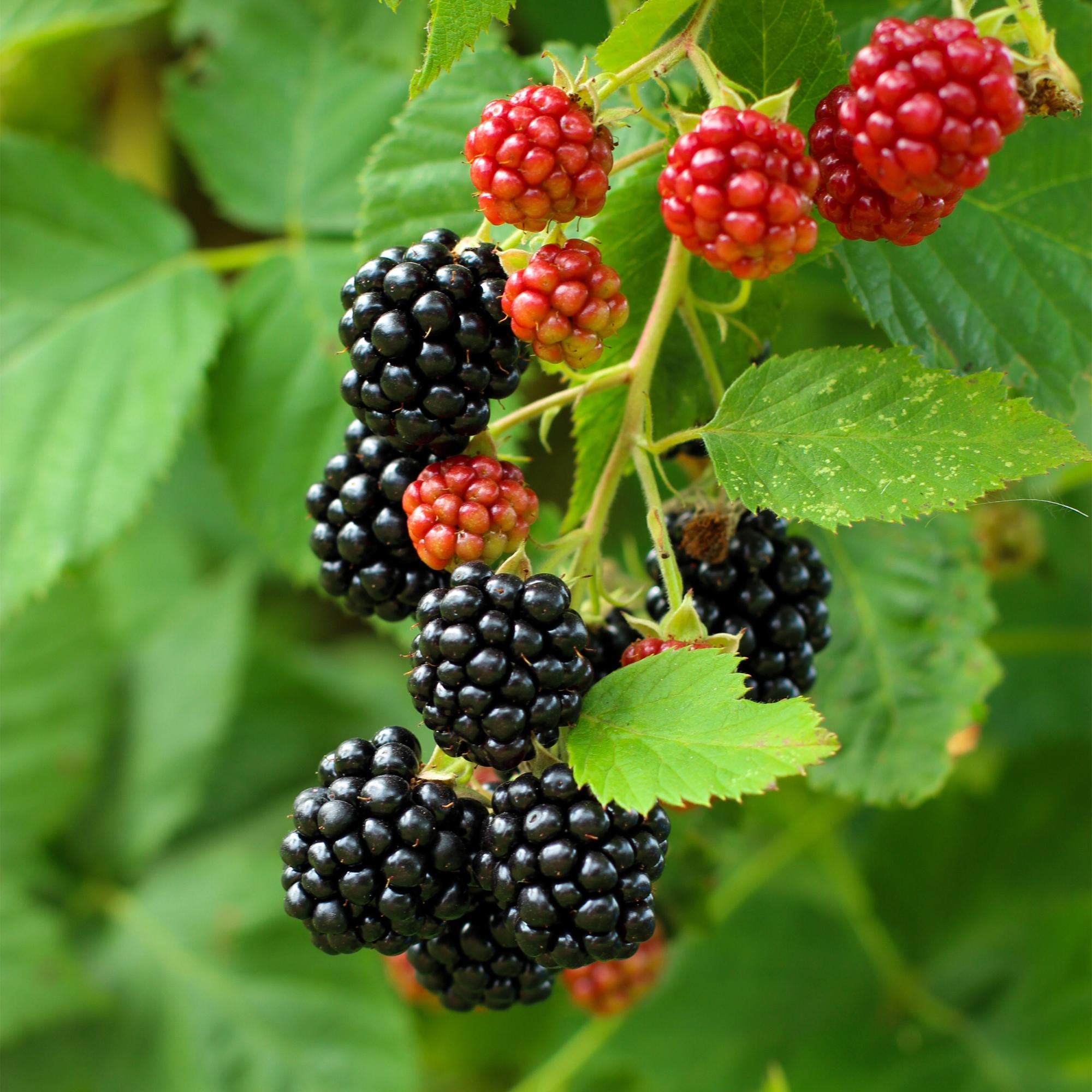
The thornless blackberry "Black Satin" (Rubus fruticosus) is a particularly popular fruit plant for home gardens. It combines high yields, aromatic, sweet fruits, and a near-thornless growth habit – ideal for family gardens.
With robust young plants like the blackberry "Black Satin" 2-pack you lay the foundation for a productive blackberry hedge or a space-saving trellis.
Origin & characteristics of the "Black Satin" blackberry
What makes this thornless blackberry special?
"Black Satin" is a proven cultivated variety with vigorous, semi-upright growth. It forms long canes and stands out for its large, deep black fruits with an intense aroma.
- Low-thorn to thornless – pleasant harvesting
- Large, juicy fruits
- Perennial and winter-hardy
- Ideal for trellises or climbing aids
Appearance & growth of the Black Satin blackberry
How does the blackberry grow?
The plant develops long, flexible canes that can be trained onto climbing supports. New shoots can reach several meters in length each season.
With the "Black Satin" blackberry 2-pack you can quickly create a productive fruit-bearing hedge.
"Black Satin" blackberry location – optimal conditions
What is an ideal location?
- Sunny to semi-shaded
- Nutrient-rich, loose soil
- Good drainage to prevent waterlogging
- Wind-protected area
The more sun the plant receives, the sweeter the fruits will develop. A trellis against a south or west-facing wall further promotes ripening.
Proper care for thornless blackberries
How often should you water blackberries?
During fruit formation, blackberries need regular water. The soil should remain evenly moist, but not waterlogged.
How do you prune the "Black Satin" blackberry?
After harvest, harvested canes are removed close to the ground. New shoots are left in place to bear fruit the following year.
Robust young plants like the thornless blackberry "Black Satin" make it easier to build a stable framework of canes.
Typical problems & solutions for blackberries
Small fruits or weak yield
This is usually due to a lack of nutrients or insufficient sunlight. Organic fertilization in the spring improves growth and fruit set.
Recognizing leaf discoloration
Yellow leaves can indicate waterlogging or nutrient deficiencies. Ensure loose soil and sufficient drainage.
Propagation of blackberries
Can you propagate "Black Satin" yourself?
Yes, propagation is possible via layering or cuttings. For a quick and reliable start, however, buying robust young plants is recommended.
Prevention & long-term plant care
Mulch protects the roots from drying out and suppresses weeds. Regular inspection of the canes and targeted pruning ensure long-lasting healthy plants.
Frequently asked questions about the "Black Satin" blackberry
Is the Black Satin blackberry winter-hardy?
Yes, it is winter-hardy. In very cold regions, slight winter protection around the root area is recommended.
When does the blackberry start bearing fruit?
Initial yields are usually possible starting from the second year. With good care, the yield increases significantly.
How big do the plants get?
The canes can grow several meters long and should be trained onto a climbing aid.
Take action now:
The thornless blackberry "Black Satin" is an ideal choice for anyone looking for low-maintenance fruit plants with high yields. With the right location, regular pruning, and balanced nutrient supply, you will secure aromatic fruits for many years to come.
Start now with robust plants like the blackberry "Black Satin" 2-pack and design your garden to be sustainable and productive.