














































Effective Pest Control in the Food Industry: Sustainable Solutions for Better Hygiene
In the food industry, hygiene, product protection, and legal compliance are among the most important success factors. Pests such as Indian meal moths or drugstore beetles can not only damage goods but also jeopardize audits and incur costs. In this article, I will show you how to detect pest infestations early, act sustainably, and achieve long-term security in production, storage, and shipping with a holistic concept.
Causes: Why do pests occur in the food industry?
Pests are often introduced via incoming goods, packaging, pallets, or transport vehicles. Warmth, food sources, and protected areas in storage and production zones promote their reproduction. The transitions between receiving, storage, production, and disposal are particularly critical.
- Incoming goods (raw materials, dry goods, packaging)
- Cracks & cavities in machinery, shelves, and baseboards
- Dust/product residues (flour, grain, spices, animal feed, nuts)
- Unclear material flows and lack of zone separation
Detection: Typical signs of infestation in storage & production
Often, a quick clue is not the pest itself, but the traces it leaves behind. The sooner you react, the smaller the damage remains. Pay special attention to risk areas such as dry storage, picking, packaging lines, and return areas.
- Fine webs or larval skins on bags, in corners, or on shelves
- Small beetles near dry goods or dust deposits
- Moth activity (especially in the evenings) in storage or break areas
- Unusual crumbs/boring dust in joints, under pallets, or under machines
Control: Sustainable solutions instead of just treating symptoms
For companies, one thing is crucial: effective pest control in the food industry is based on monitoring, root cause analysis, and targeted measures—not just reactive action. Especially in sensitive areas, biological and low-residue solutions are a sensible addition to any hygiene concept.
Reducing Indian meal moths naturally
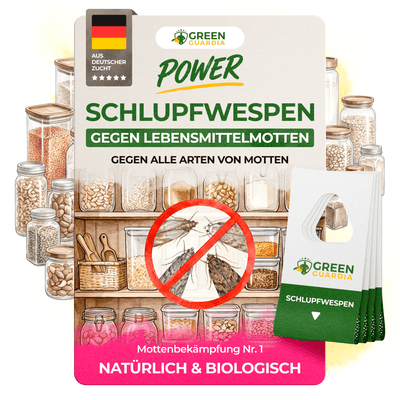
Indian meal moths frequently occur in dry storage areas, affecting nuts, grain products, flour, and feed. An effective measure is the targeted use of beneficial insects that specialize in moth eggs.
For a targeted and sustainable solution, trichogramma wasps against Indian meal moths are ideal—perfect as a supplement to monitoring and hygiene, especially in hard-to-reach areas.
Professionally containing drugstore beetle infestations in storage
Drugstore beetles (and similar stored product pests) are often found where product dust or damaged goods are present. In addition to cleaning and structural sealing, monitoring is crucial to identify hotspots and make measures plannable.
For clear detection and control of infestations, drugstore beetle traps with special attractant are suitable—useful for monitoring high-risk zones (e.g., dry storage, packaging areas, order picking).
Prevention: IPM strategy for lasting hygiene
A proven industry standard is IPM (Integrated Pest Management): a system that intelligently combines prevention, monitoring, and corrective measures. This allows you to reduce complaints, avoid production downtime, and pass audits more confidently.
- Zone concept (strictly separate incoming goods, storage, production, and waste)
- Monitoring plan with fixed check intervals and documentation
- Cleaning routines for dust, cracks, and machine bases
- Incoming goods inspection (visual inspection, quarantine for anomalies)
- Structural prevention (sealing joints, door seals, fly screens, airlocks)
Pro-tip: If you number your monitoring traps and document the results weekly, you will identify hotspots early—and can specifically optimize cleaning and intervention plans.
Common questions about pest control in the food industry
How quickly should one react to a suspected infestation?
Ideally, immediately: Infestations spread quickly in warm storage and production areas. Early root cause analysis (incoming goods, hotspots, product residues) usually saves the most costs.
What is the difference between monitoring and control?
Monitoring involves observation and early detection (e.g., traps, visual checks, documentation). Control refers to the targeted measures derived from monitoring results—ideally as part of an IPM concept.
Are biological solutions effective in sensitive areas?
Often, yes—especially as a supplement to hygiene, structural prevention, and monitoring. Biological beneficial insects can assist in hard-to-reach areas without leaving residues on surfaces.
Which areas are particularly high-risk?
Typical risk zones include incoming goods, dry storage, packaging lines, order picking, return areas, as well as waste and disposal areas—anywhere where product residues, dust, or material handling occurs.
Conclusion: Sustainable pest control in the food industry means: understanding causes, detecting early, documenting consistently, and preventing long-term with IPM. If you sensibly combine monitoring and natural solutions, you will noticeably increase hygiene, product protection, and audit security.
Take action now: Check your risk zones, establish clear monitoring—and use appropriate solutions such as trichogramma wasps against Indian meal moths or drugstore beetle traps with special attractant to specifically support your hygiene processes.